
Introduction: Choosing the Right Additive Technology for Modern Thermoplastics
Thermoplastic manufacturers today face increasing challenges in achieving stable processing, consistent product quality, and improved surface performance.
Higher extrusion speeds, complex polymer formulations, increased filler loading, recycled material utilization, and stricter appearance requirements have created new demands for polymer additives.
During extrusion, compounding, and molding processes, manufacturers may experience challenges such as unstable melt flow, high processing torque, excessive friction, die build-up, surface defects, and insufficient scratch or abrasion resistance.
To address these challenges, different additive technologies are commonly used, including silicone masterbatch, silicone oil, wax additives, and slip agents.
Although these technologies may all influence lubrication and surface behavior, their mechanisms and performance characteristics are different.
Silicone oil provides excellent immediate lubrication but may experience migration-related limitations. Wax additives offer conventional processing assistance, while slip agents are widely used for reducing coefficient of friction (COF) in film applications through controlled migration.
Silicone masterbatch represents a more efficient polymer modification approach by combining silicone polymer technology with thermoplastic carrier systems, providing controlled silicone dispersion and durable performance enhancement.
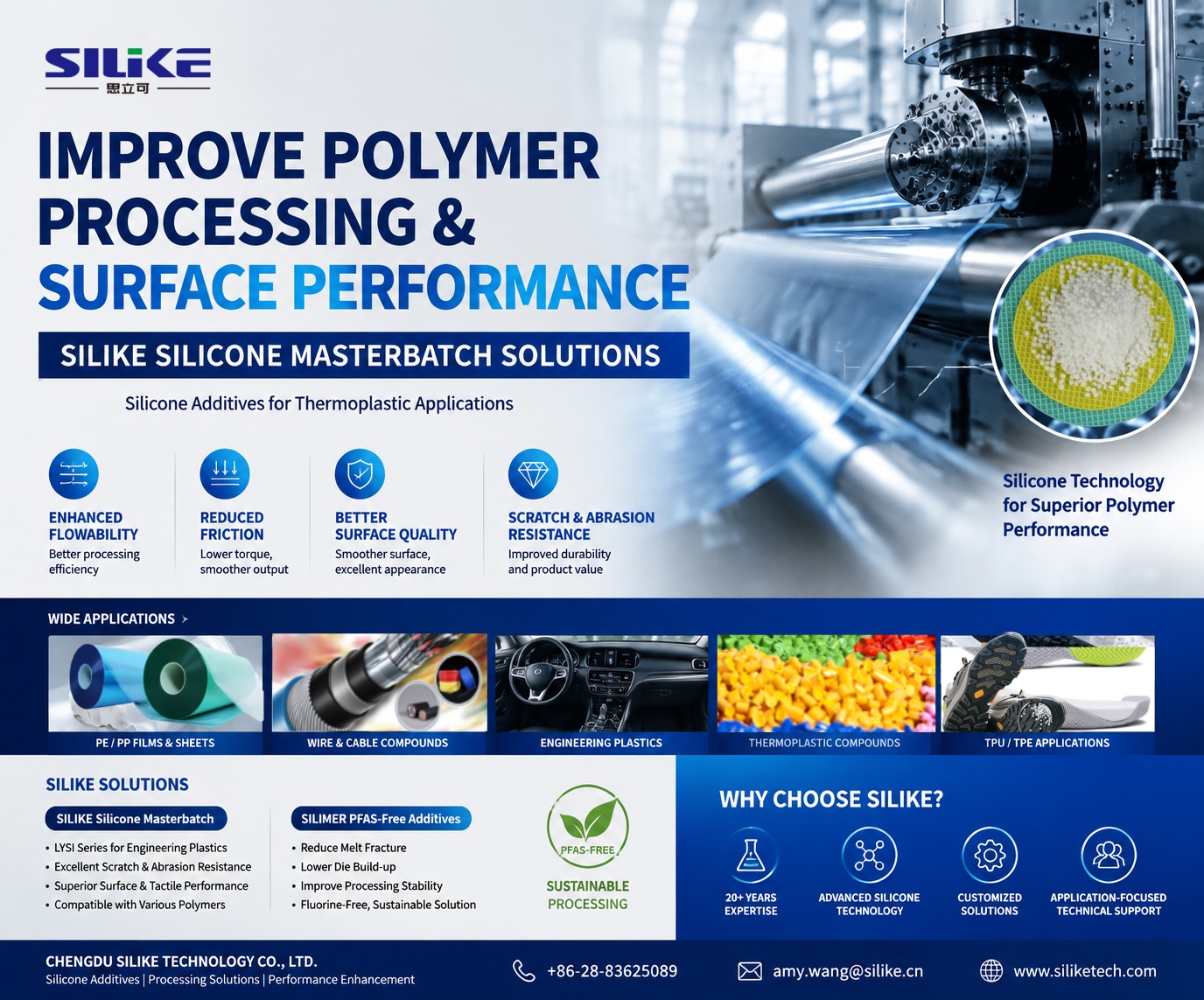
As a professional silicone masterbatch manufacturer, SILIKE develops silicone-based polymer additive solutions designed to help thermoplastic manufacturers improve processing efficiency, surface performance, and product reliability.
Understanding Silicone Masterbatch Technology
What Is Silicone Masterbatch?
Silicone masterbatch is a polymer additive technology containing high molecular weight silicone polymers dispersed in a compatible thermoplastic carrier resin.
Compared with silicone oil, silicone masterbatch provides controlled silicone distribution within the polymer matrix.
During processing and product service life, silicone components gradually migrate toward the polymer surface, creating a stable low-friction interface.
This controlled modification mechanism enables silicone masterbatch to provide balanced performance benefits, including: improved processing stability, reduced friction, enhanced surface properties, improved scratch resistance, and long-term performance consistency. The key advantage of silicone masterbatch is not only lubrication, but the ability to achieve controlled silicone modification within thermoplastic systems.
Silicone Masterbatch vs Silicone Oil: Controlled Performance vs Rapid Lubrication
Silicone Oil &Silicone Fluid Technology
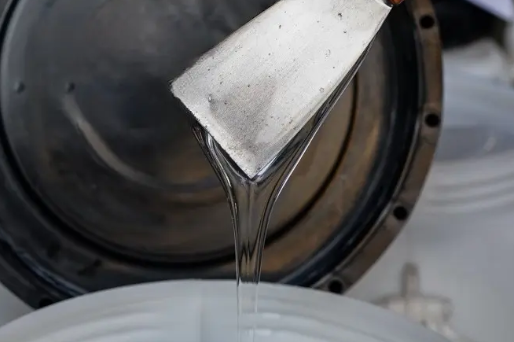
Silicone oil is widely used as a lubricant because of its excellent flowability and low surface energy.
Its low-molecular-weight structure allows rapid distribution throughout polymer systems, providing immediate lubrication, improved release performance, and reduced processing resistance.
However, the same mobility that provides fast lubrication can also create migration concerns.
Potential limitations include: surface contamination, reduced printing adhesion, coating compatibility issues, bonding difficulties, and unstable long-term friction behavior.
Therefore, silicone oil is often suitable for applications requiring temporary lubrication or release performance.
Silicone Masterbatch vs Wax Additives: Lubrication Compared with Multifunctional Modification
Wax Additives in Polymer Processing
Wax additives are traditional processing aids widely used in plastics manufacturing.
They mainly function by reducing friction between polymer chains, polymer melt, and processing equipment; filler particles and polymer matrix
Benefits include: improved melt flow, reduced processing resistance, easier extrusion.
However, wax additives generally provide limited improvement in advanced surface properties.
Compared with silicone masterbatch, wax technology has limitations in: scratch resistance, abrasion resistance, long-term low-friction performance, and premium surface feel.
For applications requiring both processing optimization and surface enhancement, silicone masterbatch provides broader functionality.
Technical Comparison of Silicone Masterbatch, Silicone Oil, and Wax Agents
|
Performance Requirement |
Silicone Masterbatch |
Silicone Oil |
Wax Additives |
| Processing improvement | Excellent | Excellent | Good |
| Friction reduction | Excellent | Excellent | Moderate |
| Migration control | High | Low | Medium |
| Surface durability | Excellent | Limited | Limited |
| Scratch resistance | Excellent | Limited | Limited |
| Long-term stability | Excellent | Limited | Medium |
| Engineering plastic applications | Excellent | Limited | Limited |
| Film applications | Excellent | Application dependent | Application dependent |
SILIKE Silicone Masterbatch Solutions for Thermoplastic Applications
Silicone-Based Polymer Modification Expertise
Selecting the right silicone additive requires more than choosing a product grade.
Performance depends on: polymer chemistry, formulation design, filler system, processing conditions, and final application requirements.
SILIKE specializes in silicone-based polymer modification technologies and provides silicone masterbatch solutions for different thermoplastic applications.
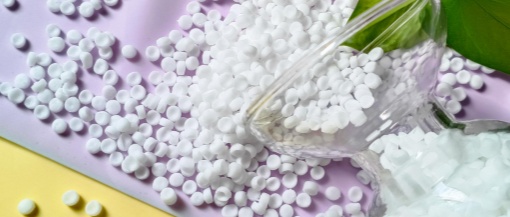
SILIKE LYSI series and SC series Silicone Masterbatch ( Siloxane Masterbatch ) solutions are pelletized formulations with 20~65% ultra-high-molecular-weight siloxane polymer dispersed in various resin carriers. It is widely used as an efficient processing additive in its compatible resin system to improve the processing properties and modify surface quality.
Compared to conventional lower‑molecular‑weight silicone/siloxane additives—such as silicone oils, silicone fluids, or other types of processing aids—SILIKE silicone masterbatches are expected to deliver enhanced benefits, including:
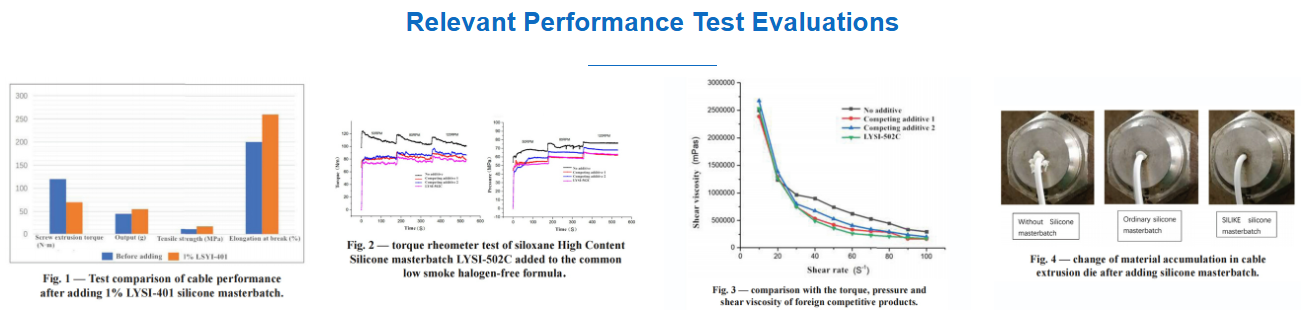
1. Processing properties: Improved melt flow, lower extruder torque, reduced die pressure& die drool, better mold filling, easier mold release, less energy consumption, and decreased cycle time.
2. Surface quality: Lower coefficient of friction, improved scratch and wear resistance, better surface slip, and hand feeling …
These silicone-based plastic additives are widely used in automotive interiors, cable and wire compounds, telecommunication pipes, footwear soles, plastic films, textiles, household appliances, and more.
SILIKE Polymer Processing Additive Technology
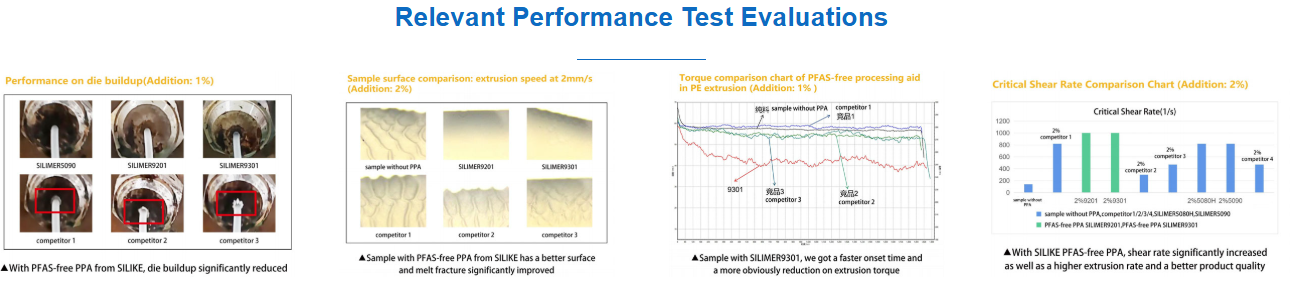
Beyond silicone masterbatch technology, SILIKE develops polymer processing solutions, such as SILIMER Series PFAS-Free Polymer Processing Additives.
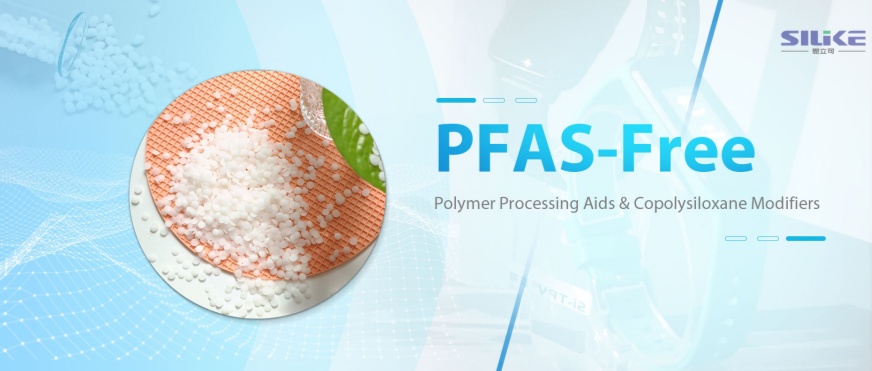
These fluorine-free processing technologies are designed to help manufacturers address: melt fracture (sharkskin), die build-up, extrusion instability, and surface defects.
By combining silicone technology and polymer processing expertise, SILIKE provides comprehensive additive solutions for sustainable thermoplastic manufacturing.
Additives for Better Polymer Performance
Choosing the right silicone masterbatch and polymer additive supplier can directly influence processing stability, product quality, and application performance.
SILIKE provides silicone masterbatches and PFAS‑free polymer processing additive solutions designed to help manufacturers achieve improved processing efficiency, enhanced surface durability, and better product consistency.
Whether your challenge is extrusion instability, surface defects, poor scratch resistance, or the need for improved polymer performance, SILIKE provides silicone‑based solutions, as well as fluorine‑free and silicone‑free PPAs tailored to your application requirements. From resin to finished part, our additives improve processing, durability, and surface properties in films, automotive, and wire & cable compounds.
Contact SILIKE to discuss your polymer processing challenges and explore a silicone masterbatch additive solution for your thermoplastic applications.
Phone: +86-28-83625089
Email:amy.wang@silike.cn
Website:www.siliketech.com
Post time: Aug-05-2026


