
1.Introduction: Improving Polymer Processing Efficiency and Product Performance
The development of advanced thermoplastic compounds has created increasing challenges for polymer processors.
Modern manufacturers are required to achieve higher production efficiency, stable processing conditions, improved product quality, and enhanced product durability while maintaining cost-effective manufacturing operations.
However, polymer formulations are becoming increasingly sophisticated. High filler loading, flame retardant systems, reinforcing additives, and advanced polymer blends are widely used to improve mechanical strength, flame resistance, dimensional stability, and functional performance.
Although these modifications provide significant advantages in final applications, they can also increase processing difficulties during extrusion, injection molding, and compounding.
Higher filler concentrations may increase melt viscosity and processing resistance. High-speed processing conditions may generate excessive shear stress, resulting in melt instability, surface defects, or die build-up. Meanwhile, many end-use applications require improved surface characteristics, including lower friction, enhanced scratch resistance, better abrasion resistance, and improved tactile performance.
These challenges are commonly encountered in:
• Flame retardant cable compounds
• Filled polypropylene systems
• Automotive interior materials
• Engineering plastics
• Packaging films
• Pipe and profile extrusion
• TPU and TPE elastomer compounds
To address these challenges, polymer processors increasingly rely on multifunctional additive technologies that can improve both processing behavior and final product performance.
Silicone masterbatch has gained increasing attention as an effective polymer additive technology because it can simultaneously influence melt processing behavior and surface characteristics.
By introducing high molecular weight silicone polymers into thermoplastic systems through a compatible carrier resin, silicone masterbatch can reduce friction, improve melt flow behavior, enhance extrusion stability, and modify surface properties of finished products.
This article explains how silicone masterbatch works in thermoplastic compounds, its role in improving processability and surface performance, key application areas, and important considerations when selecting the appropriate silicone masterbatch solution.
2. Understanding Silicone Masterbatch Technology
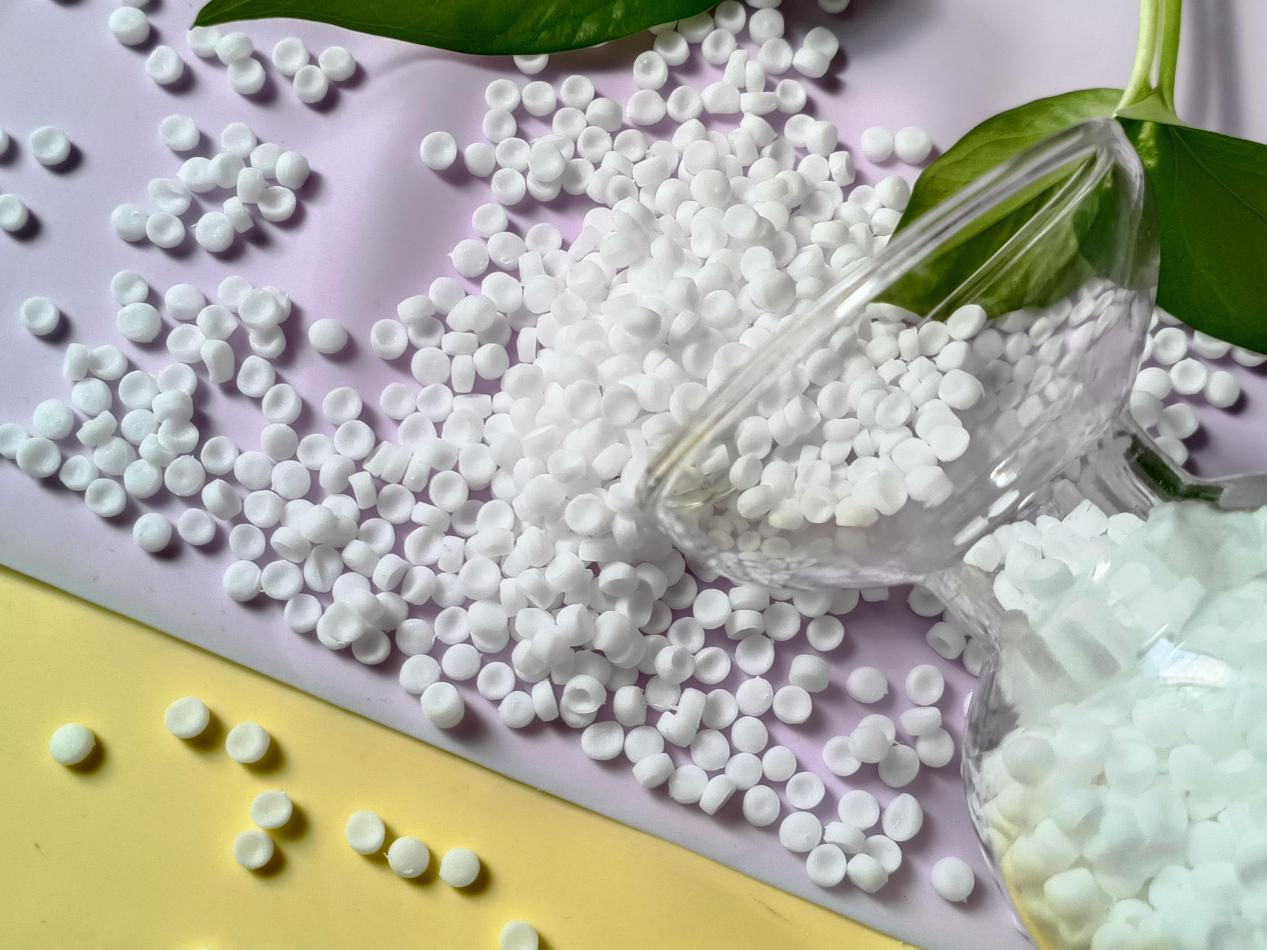
Silicone masterbatch is a concentrated silicone based plastic additive system containing high molecular weight silicone polymer dispersed within a thermoplastic carrier resin.
Unlike conventional liquid silicone fluids or low molecular weight lubricants, silicone masterbatch is designed to provide controlled silicone distribution throughout the polymer matrix during melt processing.
The carrier resin plays an important role in ensuring efficient incorporation into thermoplastic systems.
A well-designed silicone masterbatch enables:
Accurate additive dosing, consistent dispersion, easier material handling, and improved compatibility with different polymer systems.
Common carrier systems include polyethylene (PE), polypropylene (PP), EVA, TPU, TPE, and engineering polymer carriers.
During extrusion or molding, the carrier resin melts together with the base polymer, allowing silicone components to distribute within the polymer matrix.
The final performance depends on several key factors:
• Silicone molecular structure
• Silicone molecular weight
• Silicone concentration
• Carrier resin compatibility
• Processing temperature
• Polymer formulation
Among these factors, high molecular weight silicone polymer technology is particularly important because it provides controlled mobility, long-term functionality, and reduced tendency for uncontrolled migration within thermoplastic compounds.
3. How Silicone Masterbatch Improves Processability of Thermoplastic Compounds
3.1 Reducing Melt Friction and Processing Resistance
During polymer processing, friction occurs continuously between polymer chains, filler particles, and metal processing surfaces such as screws, barrels, and dies.
In highly filled compounds, these interactions become increasingly significant.
For example, halogen-free flame retardant (HFFR) and low-smoke zero-halogen (LSZH) cable compounds often contain high levels of aluminum hydroxide (ATH) or magnesium hydroxide (MDH).
These flame retardants provide excellent fire performance but can significantly increase melt viscosity and extrusion resistance.
Higher processing resistance may result in increased extrusion torque, higher energy consumption, reduced production efficiency, and narrower processing windows.
Silicone polymers possess inherently low surface energy and excellent lubricating characteristics.
When silicone masterbatch is incorporated into thermoplastic compounds, silicone components can modify interactions between polymer chains, fillers, and processing surfaces.
This reduces internal and interfacial friction during melt processing, allowing smoother polymer movement.
Potential processing benefits include:
• Lower extrusion torque
• Reduced processing stress
• Improved melt flow behavior
•More stable production conditions
3.2 Improving Extrusion Stability Under High-Speed Processing Conditions
As extrusion productivity increases, maintaining melt stability becomes more challenging.
High shear rates near the die exit can generate excessive stress within the polymer melt. When the stress exceeds the relaxation capability of the material, defects such as melt fracture and sharkskin may occur.
These defects can negatively affect surface appearance, Optical quality, and product consistency
Silicone masterbatch can influence the polymer-die interface by reducing interfacial friction between the polymer melt and metal surfaces.
This allows smoother melt release from the die and may help improve extrusion stability.
Depending on polymer type, processing conditions, and dosage level, silicone masterbatch may contribute to:
• Reduced melt fracture tendency
• Improved surface smoothness
• More consistent extrusion performance
The actual improvement depends on formulation design, die geometry, processing temperature, and production conditions.
3.3 Reducing Die Build-Up During Continuous Production
Die build-up is a common challenge in long-running extrusion operations.
Material accumulation around the die area may result in production interruptions, increased cleaning frequency, product contamination, and higher operating costs.
Silicone polymers have naturally low surface energy characteristics.
When properly dispersed within a thermoplastic system, silicone masterbatch can reduce polymer adhesion to metal processing surfaces.
This helps maintain cleaner die conditions and supports longer continuous operation.
Applications benefiting from this effect include:
• Wire and cable extrusion
• Film extrusion
• Pipe & optical fiber ducts extrusion
• Profile extrusion
3.4 Supporting Better Filler Dispersion in Highly Filled Compounds
Many advanced thermoplastic compounds rely on high levels of functional fillers.
Typical examples include: flame retardants, mineral fillers, glass fibers, and reinforcing additives.
However, achieving uniform filler distribution can be challenging because fillers may increase melt viscosity and reduce polymer mobility.
Poor filler dispersion can affect Mechanical performance, surface appearance, and processing stability.
Silicone masterbatch improves melt lubrication during compounding, allowing polymer chains to move more effectively around filler particles.
This can support improved filler distribution and more consistent compound quality.
4. How Silicone Masterbatch Enhances Surface Properties
Beyond improving processing efficiency, silicone masterbatch is widely used as a surface modification technology.
The unique characteristics of silicone polymers allow them to influence surface friction, wear behavior, and tactile properties of finished thermoplastic products.
4.1 Improving Scratch and Mar Resistance
Scratch resistance has become an increasingly important requirement in automotive interiors, consumer electronics, appliances, and decorative plastic components.
Surface damage is influenced by surface friction, contact force, material deformation, and surface energy.
Silicone masterbatch improves scratch resistance primarily by reducing surface friction.
A lower friction surface reduces mechanical stress during contact, helping minimize visible scratches and improving surface durability.
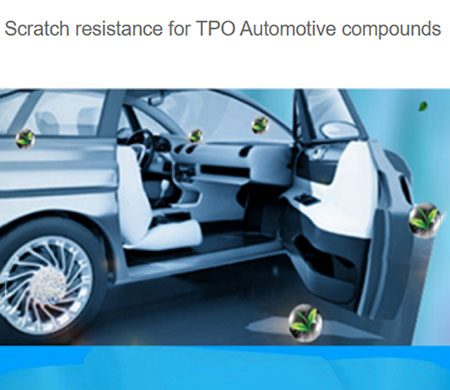
In polypropylene (PP) and thermoplastic olefin (TPO) automotive compounds, silicone-based additives are commonly evaluated as part of a formulation strategy to enhance scratch and mar resistance while maintaining appearance, mechanical properties, and processing performance
4.2 Reducing Surface Friction and Improving Slip Performance
Many thermoplastic applications require controlled coefficient of friction (COF).
Examples include: Packaging films, Cable jackets, sliding components, and flexible polymer products.
Silicone masterbatch provides a silicone-based approach for modifying surface friction behavior.
Compared with traditional slip additives, silicone masterbatch offers different performance characteristics based on silicone molecular structure, compatibility, and application requirements.
When selecting a solution, processors should consider required friction level, polymer compatibility, migration requirements, printing, coating, or adhesion performance.
4.3 Enhancing Abrasion Resistance and Soft-Touch Performance
Materials exposed to repeated mechanical contact require improved wear resistance and surface durability.
Applications such as cable jackets, footwear components, TPU products, and wearable devices require a balance between flexibility, durability, and comfortable surface feel.
By reducing frictional forces at the surface, silicone masterbatch may contribute to:
• Improved abrasion resistance
• Enhanced surface smoothness
• Increased durability
• Better tactile performance
For TPU and TPE systems, silicone modifier is especially valuable because these materials require careful balance between softness, flexibility, and long-term surface performance.
5. Silicone Masterbatch Applications in Thermoplastic Compounds
5.1 Silicone Masterbatch for Wire and Cable Compounds
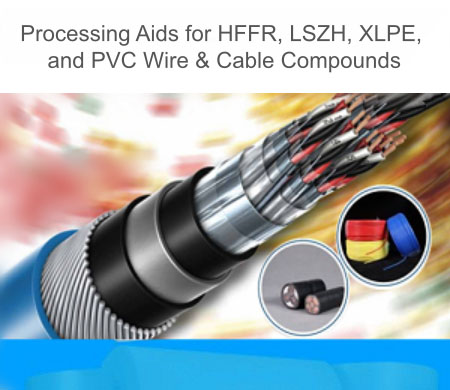
Wire and cable materials often contain high levels of flame retardants and fillers, creating challenges related to processing resistance, surface quality, and abrasion performance.
Silicone masterbatch technology is widely evaluated in HFFR, LSZH, XLPE compounds, Low smoke PVC cable compounds, TPE wire, and TPU cable jacket systems to improve:
• Melt lubrication
• Die drool & build up
• Extrusion stability
• Extrusion Speed
• Surface smoothness
• Friction behavior
• Wear resistance
5.2 Silicone Masterbatch for Automotive Interior Materials
Automotive manufacturers increasingly require interior plastics with improved durability, low friction surfaces, and premium tactile performance.
Common materials include:
• PP
• TPO
• TPV
• ABS
• PC/ABS
Silicone masterbatch can support improvements in:
• Scratch resistance
• Surface feel
• Processing efficiency
• Long-term surface durability
• No stickiness
• Low VOCs
5.3 Silicone Masterbatch for Film and Packaging Applications
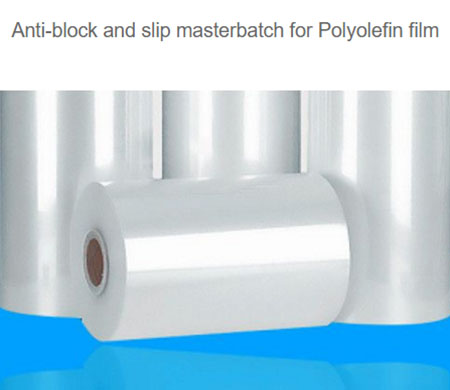
Film extrusion requires stable processing and controlled friction characteristics.
Silicone masterbatch may help improve:
• Melt stability
• Surface smoothness
• Slip performance
• Anti-blocking
• Processing consistency
Applications include PE films, PP films, packaging films, and industrial films.
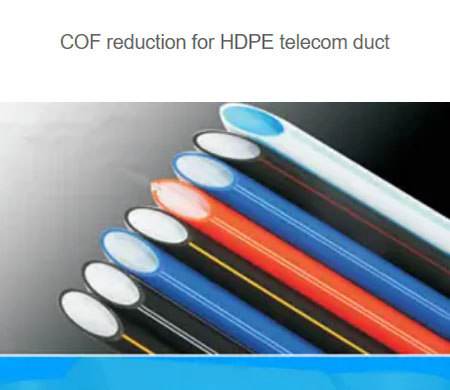
5.4 Silicone Masterbatch for Pipe and Optical Fiber Ducts
Silicone core pipes require a smooth, low-friction inner surface to enable easy installation and protection of fiber optic cables. However, achieving consistent silicone dispersion and maintaining excellent processing performance during high-speed HDPE extrusion can be challenging.
Silicone masterbatch solutions are designed for HDPE silicone core pipes and optical fiber microducts to provide:
• Excellent internal lubrication for smoother cable installation
• Lower coefficient of friction (COF) for reduced pulling resistance
• Enhanced wear resistance during cable insertion
• Improved extrusion process stability
• Better silicone dispersion and consistent inner layer performance
• Reduced processing friction and energy consumption
5.4 Silicone Masterbatch for TPU, TPE, and Engineering Plastics
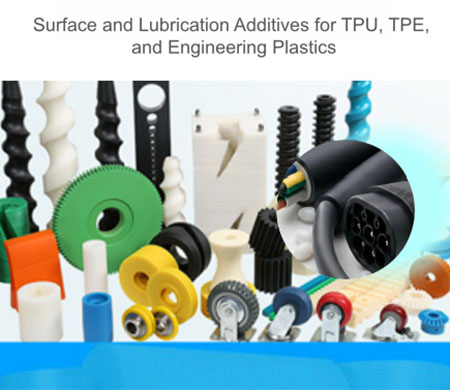
Flexible thermoplastics such as TPU and TPE require optimized surface properties including smoothness, abrasion resistance, and soft-touch performance.
Engineering plastics including PA, PC, ABS, PBT, and PET may also benefit from silicone modification for applications requiring:
• Reduced friction
• Improved mold release
• Enhanced surface performance
6.Silicone Masterbatch Compared With Other Additive Technologies
| Feature | Wax and ester series | Amide series | PPA(Fluoropolymer Processing Aids) | Silicone masterbatch | |
| Molecular weight | low | low | high | high | |
| Thermal stability | Bad | bad | bad | good | |
| Lubrication efficiency | low | high | high | high | |
| Migration | Migration | Migration | Non-migration | Non-migration | |
| Working temperature | Normal temperature | Normal temperature | Good low and high temperature resistance | Good low and high temperature resistance | |
| Effects on transparency | slight | slight | slight | big | |
| Improvement on surface slip | good | good | average | good | |
| Improvement on abrasion and scratch resistance | bad | good | bad | good | |
| Durable on surface effects | bad | bad | good | good | |
7. How to Select the Right Silicone Masterbatch for Thermoplastic Compounds
The effectiveness of silicone masterbatch depends strongly on proper material selection.
7.1 Polymer Compatibility
Different polymer systems require different silicone masterbatch designs.
A grade optimized for PE or PP may not provide the same performance in TPU, TPE, PA, PC, or other engineering plastics.
Carrier resin selection and silicone structure should be matched with the target polymer system.
7.2 Processing Conditions
Important parameters include: Processing temperature, screw speed, shear rate, residence time, and filler concentration.
These factors influence silicone dispersion and final performance.
7.3 Performance Requirements
The selection process should begin with defining the primary objective.
For processing improvement: Torque reduction, extrusion stability, reduced die build-up.
For surface improvement: Lower friction, scratch resistance, abrasion resistance, enhanced tactile performance.
Application testing and production trials are essential to determine the optimum dosage and formulation balance.
8. SILIKE UHMW Silicone Masterbatch: Processing and Surface Solutions
As a leading silicone masterbatch manufacturer in China, Chengdu SILIKE Technology Co., Ltd. has established extensive expertise in silicone-polymer integration technology. Based on ultra-high molecular weight silicone polymer (UHMW silicone) technology, SILIKE has developed a comprehensive range of high-performance silicone masterbatch solutions that, as processing aids, surface modifiers, and lubricants, are widely recognized and trusted by polymer customers worldwide.
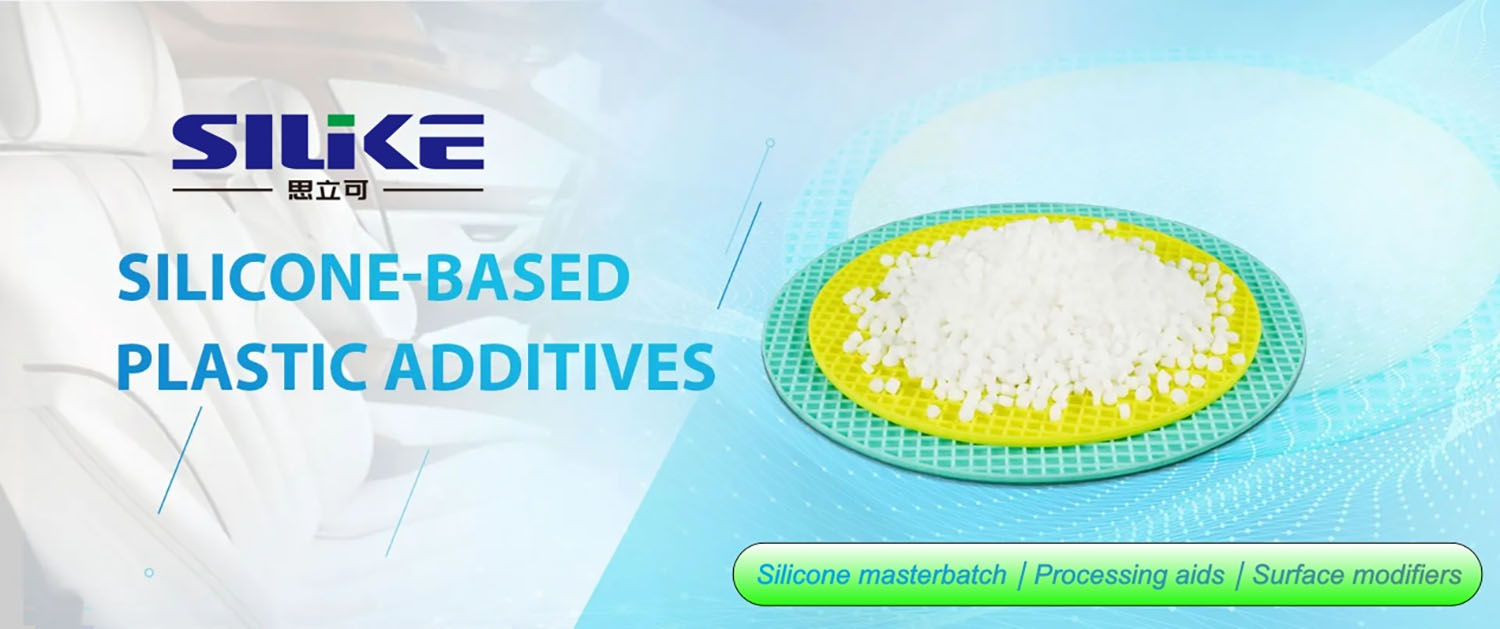
The SILIKE LYSI series Silicone Masterbatch ( Siloxane Masterbatch ) is formulated with 25–70% functional UHMW silicone polymers dispersed in application-specific thermoplastic carrier systems, enabling excellent silicone dispersion, stable processing performance, and long-lasting surface modification effects.
This advanced technology allows controlled silicone distribution across a broad range of polymer systems, including PE, PP, EVA, TPU, TPEE, PA6, PET, ABS, PC, POM, HIPS, SAN, and other engineering plastics.
The unique high molecular weight silicone structure provides:
• Controlled dispersion within polymer matrices
• Long-term performance stability
• Reduced migration tendency
• Effective surface modification
• Enhanced processing efficiency and material performance
With extensive polymer application experience and strong formulation development capabilities, SILIKE works closely with customers worldwide to develop customized silicone masterbatch solutions that address real processing challenges, including:
• Improving lubrication and reducing processing friction
• Enhancing surface smoothness and appearance
• Improving scratch and abrasion resistance
• Reducing extrusion defects and improving production stability
• Optimizing processing efficiency and final product performance
SILIKE silicone masterbatch solutions are widely used in:
• Wire and cable compounds
• Automotive plastics
• Film extrusion
• Silicone core pipes and microducts
• TPU and TPE materials
• Footwear materials
• Engineering plastics
• Other high-performance thermoplastic applications
9. Technical Evaluation and Application Development Support
The performance of silicone masterbatch depends on multiple factors, including polymer type, formulation design, processing conditions, additive compatibility, and final application requirements. Therefore, application-specific evaluation and formulation optimization are essential to achieve stable processing performance, effective silicone dispersion, and consistent results within the target polymer system.
In addition to providing standard silicone masterbatch grades for a wide range of thermoplastic applications, SILIKE also offers customized application support and tailored silicone masterbatch solutions based on customers’ specific material systems, processing challenges, and performance targets.
Through close cooperation with customers, SILIKE evaluates factors such as resin compatibility, filler systems, processing conditions, and desired end-use properties to help identify the most suitable silicone masterbatch solution. Customized formulations can be developed when standard grades cannot fully meet specific application requirements.
With extensive experience in silicone-polymer integration technology, SILIKE provides technical support throughout product selection, formulation optimization, and application development.
From laboratory evaluation and processing trials to production-scale validation, SILIKE works closely with customers to optimize formulations and support the development of high-performance thermoplastic materials with improved processability, surface properties, and long-term performance.
10. Conclusion: Silicone Masterbatch as a Multifunctional Polymer Additive Technology
As thermoplastic applications continue to advance, polymer processors are increasingly seeking additive technologies that can improve manufacturing efficiency while meeting more demanding product performance requirements.
Silicone masterbatch has evolved from a conventional processing additive into a multifunctional polymer modification technology that helps manufacturers optimize both processing behavior and final material performance. For manufacturers developing advanced thermoplastic compounds, silicone masterbatch represents more than a conventional lubricant or processing aid. It provides a versatile solution for improving melt processing, surface properties, durability, and long-term material performance.
By integrating silicone polymer technology with thermoplastic systems, silicone masterbatch enables more stable processing, enhanced surface functionality, and improved product consistency. Compared with traditional single-function additives, it offers a broader approach by combining processing optimization and surface enhancement within one additive technology.
The successful application of silicone masterbatch depends on selecting the appropriate silicone chemistry, carrier system, dosage level, and processing conditions. Through application-specific evaluation and formulation optimization, manufacturers can achieve solutions tailored to their polymer systems and end-use requirements.
With expertise in silicone-polymer integration and polymer application development, SILIKE provides silicone masterbatch solutions for demanding applications including wire and cable compounds, film extrusion, automotive plastics, TPU/TPE materials, engineering polymers, and footwear compounds. By combining material innovation, technical expertise, and application experience, SILIKE supports customers in developing high-performance and sustainable thermoplastic solutions.
For detailed technical datasheets, free silicone masterbatch sample evaluation support, application briefs, and product specifications, please visit our official website: www.siliketech.com
Or directly contact Amy Wang:
Email: amy.wang@silike.cn
Phone: +86-28-83625089
Mobile / WhatsApp: +86-15108280799
Post time: Aug-04-2026


