
Product

Low-Friction Surface Modifier for LSZH/HFFR Cable Sheaths and Jackets – Silicone Masterbatch LYSI-412
Description
Cable insulation and sheathing compounds often require a balance between extrusion processability, surface smoothness, and controlled friction. In highly filled LSZH/HFFR formulations, elevated processing resistance and die build-up may further affect the consistency of the extruded cable surface.
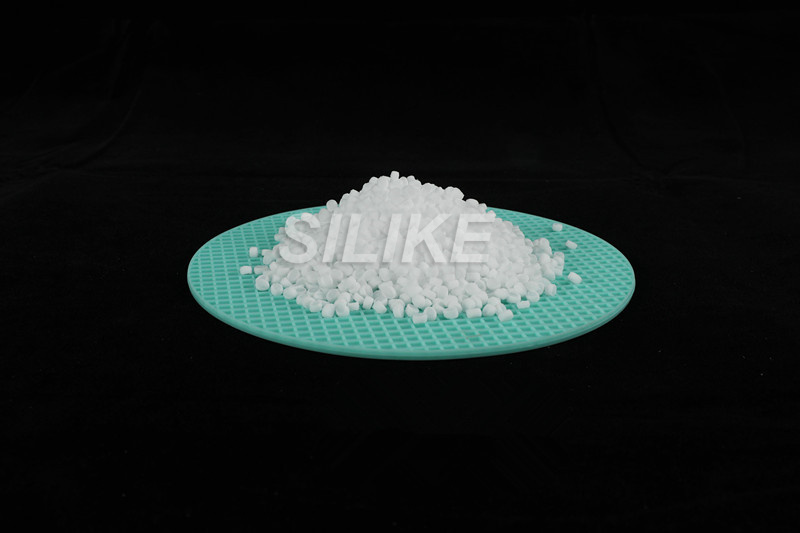
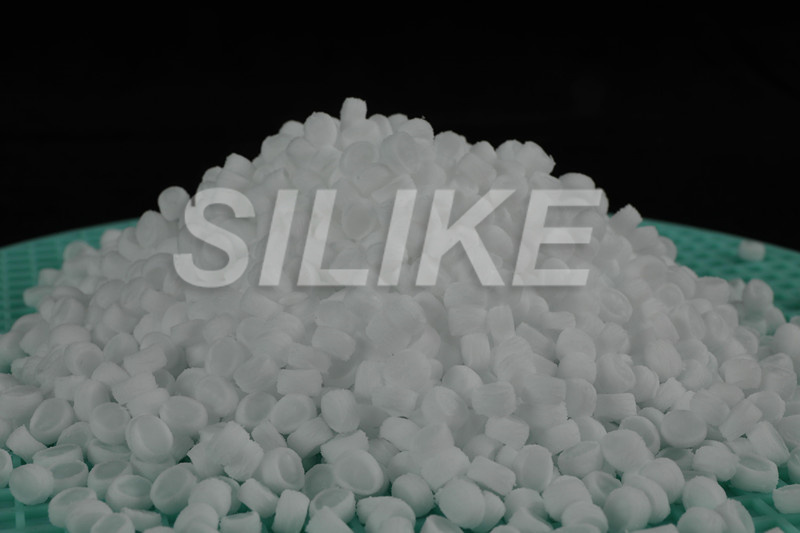
SILIKE Silicone Masterbatch LYSI-412 is a pelletized processing aid and surface modifier containing 50% ultra-high-molecular-weight siloxane polymer dispersed in a polyethylene carrier. Designed for PE-compatible compounds, it can help improve melt flow, reduce extrusion resistance and die build-up, and support more stable processing.
A key application focus is cable surface modification. The silicone-based additive can help reduce the coefficient of friction (COF), improve surface slip and smoothness, and enhance scratch and abrasion resistance in suitable formulations. The resulting performance depends on the polymer system, addition level, processing conditions, and final cable requirements.
Fundamental Parameters
|
Grade |
LYSI-412 |
|
Appearance |
White pellet |
|
Silicone content % |
50 |
|
Resin base |
PE |
|
Melt index ( 230℃, 2.16KG ) g/10min |
4.0( typical value ) |
|
Dosage% (w/w) |
0.5~5 |
Benefits
(1) Improve processing properties including better flow ability , reduced extrusion die drool , less extruder torque , better molding filling & release
(2) Improve surface quality like surface slip, lower Coefficient of friction.
(3) Greater abrasion & scratch resistance
(4) Faster throughput , reduce product defect rate.
(5) Enhance stability compare with traditional processing aid or lubricants
....
Applications :
(1) LSZH/HFFR wire and cable compounds
(2) PE-compatible cable jacketing and sheathing compounds
(3) Cable compounds requiring improved surface lubricity and lower friction
(4) Wire and cable extrusion applications requiring improved surface quality
(5) Other PE-compatible plastics
...
How to use
SILIKE LYSI series silicone masterbatch may be processed in the same way as the resin carrier on which they based. It can be used in classical melt blending process like Single /Twin screw extruder, injection molding. A physical blend with virgin polymer pellets is recommended .
Recommend dosage
When added to polyethylene or similar thermoplastic at 0.2 to 1% , improved processing and flow of the resin is expected, including better mold filling, less extruder torque, internal lubricants, mold release and faster throughput; At a higher addition level , 2~5%, improved surface properties are expected, including lubricity , slip, lower coefficient of friction and greater mar/scratch and abrasion resistance
Package
25Kg / bag , craft paper bag
Storage
Transport as non-hazardous chemical. Store in a cool , well ventilated place .
Shelf life
Original characteristics remain intact for 24 months from the production date , if kept in recommend storage.
FAQ
Frequently Asked Questions About Silicone Slip Additives for Cable Jackets
1. What silicone additive can help reduce the coefficient of friction of cable jackets?
Silicone-based surface modifiers can be evaluated to lower friction and improve surface slip in compatible polymer compounds. SILIKE Silicone Masterbatch LYSI-412 contains 50% ultra-high-molecular-weight siloxane polymer and is intended for PE-compatible cable formulations. The resulting COF depends on the base polymer, additive concentration, surface condition, and test method.
2. How can cable jacket surface smoothness and slip be improved during extrusion?
Cable surface quality is influenced by compound rheology, filler loading, die design, and extrusion conditions. LYSI-412 may help improve processing lubrication and surface smoothness while reducing friction in suitable formulations. Comparative trials should assess surface appearance and COF alongside extrusion stability, rather than relying on visual appearance alone.
3. Can silicone masterbatch improve abrasion and scratch resistance of cable sheathing?
Ultra-high-molecular-weight silicone additives may help reduce surface friction and improve resistance to scratching and abrasion. LYSI-412 can be evaluated where cable sheath durability is an important performance requirement. Scratch resistance and abrasion resistance should be measured separately because a lower COF does not necessarily indicate improved performance in every wear test.
4. Can a low-friction silicone additive also improve LSZH/HFFR cable extrusion?
In compatible LSZH/HFFR compounds, silicone masterbatch may provide processing lubrication in addition to surface modification. LYSI-412 can help reduce processing resistance and die build-up while supporting smoother extrusion. The extent of improvement depends on the polymer blend, mineral filler content, addition level, and equipment conditions.
5. How does silicone masterbatch differ from conventional slip lubricants used in cable compounds?
Silicone masterbatches incorporate silicone polymer into a pelletized carrier for melt processing. High-molecular-weight silicone additives may offer different surface friction and migration behavior from certain lower-molecular-weight lubricants. The choice should be based on the intended COF, aging behavior, abrasion performance, and downstream requirements. LYSI-412 should be evaluated in the final cable compound rather than assumed to be a direct replacement.
6. What should manufacturers test when selecting a silicone slip additive for cable insulation or sheathing?
Evaluation should include surface COF, appearance, scratch resistance, abrasion resistance, and extrusion behavior at the intended dosage. Depending on the cable design, marking, printing, bonding, or overjacketing compatibility may also require testing. Relevant mechanical, flame-retardant, and electrical properties should be checked before adopting the modified formulation.
Chengdu SILIKE Technology Co., Ltd. is a leading manufacturer and supplier of silicone-based materials and high-performance plastic additives, with more than 20 years of expertise in integrating silicone technologies with thermoplastics.
Our product portfolio includes silicone masterbatches, silicone powders, anti-scratch masterbatches, super-slip masterbatches, anti-abrasion masterbatches, anti-squeak additives, silicone waxes, dynamically vulcanized thermoplastic silicone-based elastomers (Si-TPV), PFAS-free polymer processing aids (PPAs), PFAS- and siloxane-free polymer processing aids, non-migrating slip and anti-blocking solutions, copolymeric siloxane additives and modifiers, hyperdispersants, functional additives for biodegradable materials, processing lubricants for wood-plastic composites (WPCs), matte-effect masterbatches, slip-resistant and wear-resistant functional additives, as well as a broad range of other high-performance additives for polymer processing and surface modification.
For more information, technical data, or application test results, please feel free to contact Ms. Amy Wang.
Email: amy.wang@silike.cn
WhatsApp / Mobile: +86 151 0828 0799
FREE SILICONE ADDITIVES AND Si-TPV SAMPLES MORE THAN 100 GRADES

Sample type
$0
- 50+
grades Silicone Masterbatch
- 10+
grades Silicone Powder
- 10+
grades Anti-scratch Masterbatch
- 10+
grades Anti-abrasion Masterbatch
- 10+
grades Si-TPV
- 8+
grades Silicone Wax


-

Phone
-

E-mail
-

Whatsapp
Whatsapp

-

Top

- English
- Chinese
- French
- German
- Portuguese
- Spanish
- Russian
- Japanese
- Korean
- Arabic
- Irish
- Greek
- Turkish
- Italian
- Danish
- Romanian
- Indonesian
- Czech
- Afrikaans
- Swedish
- Polish
- Basque
- Catalan
- Esperanto
- Hindi
- Lao
- Albanian
- Amharic
- Armenian
- Azerbaijani
- Belarusian
- Bengali
- Bosnian
- Bulgarian
- Cebuano
- Chichewa
- Corsican
- Croatian
- Dutch
- Estonian
- Filipino
- Finnish
- Frisian
- Galician
- Georgian
- Gujarati
- Haitian
- Hausa
- Hawaiian
- Hebrew
- Hmong
- Hungarian
- Icelandic
- Igbo
- Javanese
- Kannada
- Kazakh
- Khmer
- Kurdish
- Kyrgyz
- Latin
- Latvian
- Lithuanian
- Luxembou..
- Macedonian
- Malagasy
- Malay
- Malayalam
- Maltese
- Maori
- Marathi
- Mongolian
- Burmese
- Nepali
- Norwegian
- Pashto
- Persian
- Punjabi
- Serbian
- Sesotho
- Sinhala
- Slovak
- Slovenian
- Somali
- Samoan
- Scots Gaelic
- Shona
- Sindhi
- Sundanese
- Swahili
- Tajik
- Tamil
- Telugu
- Thai
- Ukrainian
- Urdu
- Uzbek
- Vietnamese
- Welsh
- Xhosa
- Yiddish
- Yoruba
- Zulu
- Kinyarwanda
- Tatar
- Oriya
- Turkmen
- Uyghur