
Product

Processing Aid for Silane-Crosslinkable PE Cable Insulation and Premature Crosslinking Control – Silicone Masterbatch LYPA-208C
Description
Silane-crosslinkable polyethylene cable compounds can experience premature crosslinking during processing, particularly when temperature, moisture exposure, or residence time are not adequately controlled. Pre-crosslinked material may contribute to increased melt resistance, screw-channel deposits, extrusion instability, and surface defects.
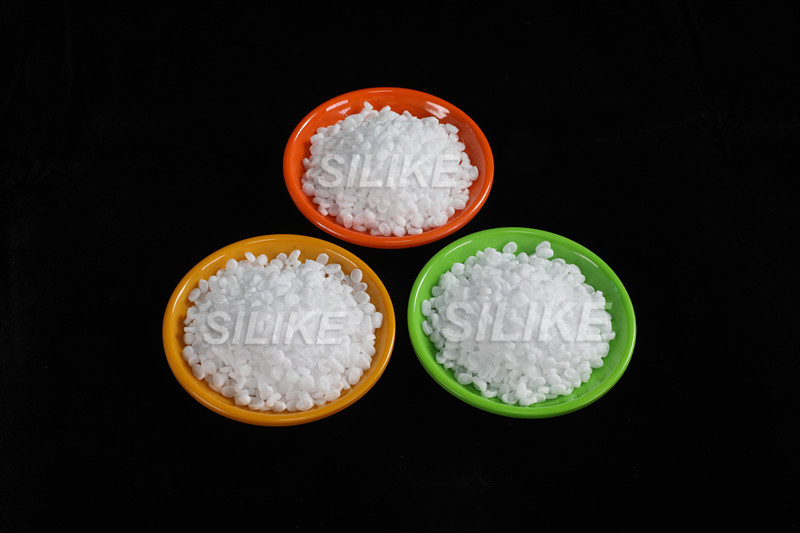
SILIKE Silicone Masterbatch LYPA-208C is a pelletized processing additive containing 50% ultra-high-molecular-weight siloxane polymer with a specially designed chemical structure in a polyethylene carrier. Developed for silane-crosslinkable PE systems, it provides processing lubrication that can help improve melt flow, reduce material build-up, and mitigate extrusion difficulties associated with premature crosslinking.
In suitable formulations, LYPA-208C may help reduce extrusion torque and support smoother cable insulation surfaces and more stable processing. The effect on final crosslinking behavior, gel content, and cable performance should be verified under the intended curing conditions. Processing temperatures, moisture control, and residence time remain important factors in managing scorch.
Fundamental Parameters
|
Grade |
LYPA-208C |
|
Appearance |
White pellet |
|
Silicone content (%) |
50 |
|
Resin base |
PE |
|
Melt index (230℃, 2.16KG) g/10min |
>7 |
|
Dosage % (w/w) |
0.2~5 |
Features
In silane-crosslinkable polyethylene (PE) systems, premature crosslinking during processing can reduce melt flow and cause material build-up in screw channels and equipment dead zones. These pre-crosslinked agglomerates may lead to unstable extrusion and surface defects on the finished cable. LYPA-208C acts as an effective processing lubricant, helping improve processability, reduce material build-up and premature crosslinking, and promote a smoother extruded surface.
How to use
Addition levels between 0.2~5.0% is suggested . It can be used in classical melt blending process like Single /Twin screw extruders, injection molding. A physical blend with virgin polymer pellets is recommended . For better result , pre-drying is recommend for 1 hour at 70-75 ℃ .
Package
25Kg / bag , craft paper bag
Storage
Transport as non-hazardous chemical. Store in a cool , well ventilated place .
Shelf life
Original characteristics remain intact for 24 months from the production date , if kept in recommend storage.
FAQ
Frequently Asked Questions About Processing Aids for Silane-Crosslinkable PE Cables
1. What processing additive can help control premature crosslinking in silane-XLPE cable extrusion?
Premature crosslinking, or scorch, can cause increased melt resistance, material deposits, and unstable extrusion. SILIKE Silicone Masterbatch LYPA-208C is developed for silane-crosslinkable polyethylene cable compounds and can be evaluated to improve processability and reduce pre-crosslinking-related processing difficulties. It does not replace appropriate control of processing temperature, moisture exposure, and residence time.
2. Why do silane-crosslinkable PE compounds develop screw deposits and rough cable surfaces?
Premature crosslinking can produce partially crosslinked material that is difficult to convey and extrude uniformly. Accumulation in screw channels or equipment dead zones may lead to pressure fluctuations and visible surface defects. LYPA-208C may help improve lubrication and reduce processing-related material build-up. The underlying cause should also be investigated through formulation and equipment evaluation.
3. Can silicone processing aids improve melt flow in silane-crosslinkable polyethylene without affecting final curing?
Suitable processing aids may help improve melt flow and extrusion behavior before the intended crosslinking stage. LYPA-208C is designed for this application, but preservation of final curing performance should be confirmed through testing. Gel content, hot-set properties, and other relevant crosslinking measurements should be evaluated under the customer's actual curing conditions.
4. How can sharkskin and surface roughness be reduced during silane-XLPE cable insulation extrusion?
Surface roughness may arise from melt flow instability, material deposits, premature crosslinking, or unsuitable extrusion conditions. LYPA-208C may help improve processing lubrication and support smoother extrusion in compatible silane-crosslinkable PE compounds. Comparative trials should assess the surface finish, melt pressure, processing temperature, and final insulation properties.
5. Is a processing aid for silane-crosslinkable XLPE also suitable for peroxide-crosslinked PE?
Not necessarily. Silane-crosslinking and peroxide-crosslinking systems involve different reaction mechanisms and processing requirements. LYPA-208C is positioned for silane-crosslinkable PE compounds. Its suitability for peroxide-crosslinked formulations should not be assumed without additional compatibility, curing, and final-property testing.
6. What should cable manufacturers evaluate before using a silicone additive in silane-XLPE insulation compounds?
Evaluation should include the silane-crosslinking process, resin formulation, catalyst system, moisture management, extrusion temperature, and residence time. Relevant measurements may include extrusion torque, pressure stability, die deposits, surface defects, gel content, and final insulation performance. SILIKE can discuss LYPA-208C application trials based on these processing and crosslinking requirements.
Chengdu SILIKE Technology Co., Ltd. is a leading manufacturer and supplier of silicone-based materials and high-performance plastic additives, with more than 20 years of expertise in integrating silicone technologies with thermoplastics.
Our product portfolio includes silicone masterbatches, silicone powders, anti-scratch masterbatches, super-slip masterbatches, anti-abrasion masterbatches, anti-squeak additives, silicone waxes, dynamically vulcanized thermoplastic silicone-based elastomers (Si-TPV), PFAS-free polymer processing aids (PPAs), PFAS- and siloxane-free polymer processing aids, non-migrating slip and anti-blocking solutions, copolymeric siloxane additives and modifiers, hyperdispersants, functional additives for biodegradable materials, processing lubricants for wood-plastic composites (WPCs), matte-effect masterbatches, slip-resistant and wear-resistant functional additives, as well as a broad range of other high-performance additives for polymer processing and surface modification.
For more information, technical data, or application test results, please feel free to contact Ms. Amy Wang.
Email: amy.wang@silike.cn
WhatsApp / Mobile: +86 151 0828 0799
FREE SILICONE ADDITIVES AND Si-TPV SAMPLES MORE THAN 100 GRADES

Sample type
$0
- 50+
grades Silicone Masterbatch
- 10+
grades Silicone Powder
- 10+
grades Anti-scratch Masterbatch
- 10+
grades Anti-abrasion Masterbatch
- 10+
grades Si-TPV
- 8+
grades Silicone Wax




-

Phone
-

E-mail
-

Whatsapp
Whatsapp

-

Top

- English
- Chinese
- French
- German
- Portuguese
- Spanish
- Russian
- Japanese
- Korean
- Arabic
- Irish
- Greek
- Turkish
- Italian
- Danish
- Romanian
- Indonesian
- Czech
- Afrikaans
- Swedish
- Polish
- Basque
- Catalan
- Esperanto
- Hindi
- Lao
- Albanian
- Amharic
- Armenian
- Azerbaijani
- Belarusian
- Bengali
- Bosnian
- Bulgarian
- Cebuano
- Chichewa
- Corsican
- Croatian
- Dutch
- Estonian
- Filipino
- Finnish
- Frisian
- Galician
- Georgian
- Gujarati
- Haitian
- Hausa
- Hawaiian
- Hebrew
- Hmong
- Hungarian
- Icelandic
- Igbo
- Javanese
- Kannada
- Kazakh
- Khmer
- Kurdish
- Kyrgyz
- Latin
- Latvian
- Lithuanian
- Luxembou..
- Macedonian
- Malagasy
- Malay
- Malayalam
- Maltese
- Maori
- Marathi
- Mongolian
- Burmese
- Nepali
- Norwegian
- Pashto
- Persian
- Punjabi
- Serbian
- Sesotho
- Sinhala
- Slovak
- Slovenian
- Somali
- Samoan
- Scots Gaelic
- Shona
- Sindhi
- Sundanese
- Swahili
- Tajik
- Tamil
- Telugu
- Thai
- Ukrainian
- Urdu
- Uzbek
- Vietnamese
- Welsh
- Xhosa
- Yiddish
- Yoruba
- Zulu
- Kinyarwanda
- Tatar
- Oriya
- Turkmen
- Uyghur