
IS YOUR CAST FILM LINE LOSING EFFICIENCY
WITHOUT YOU KNOWING IT?
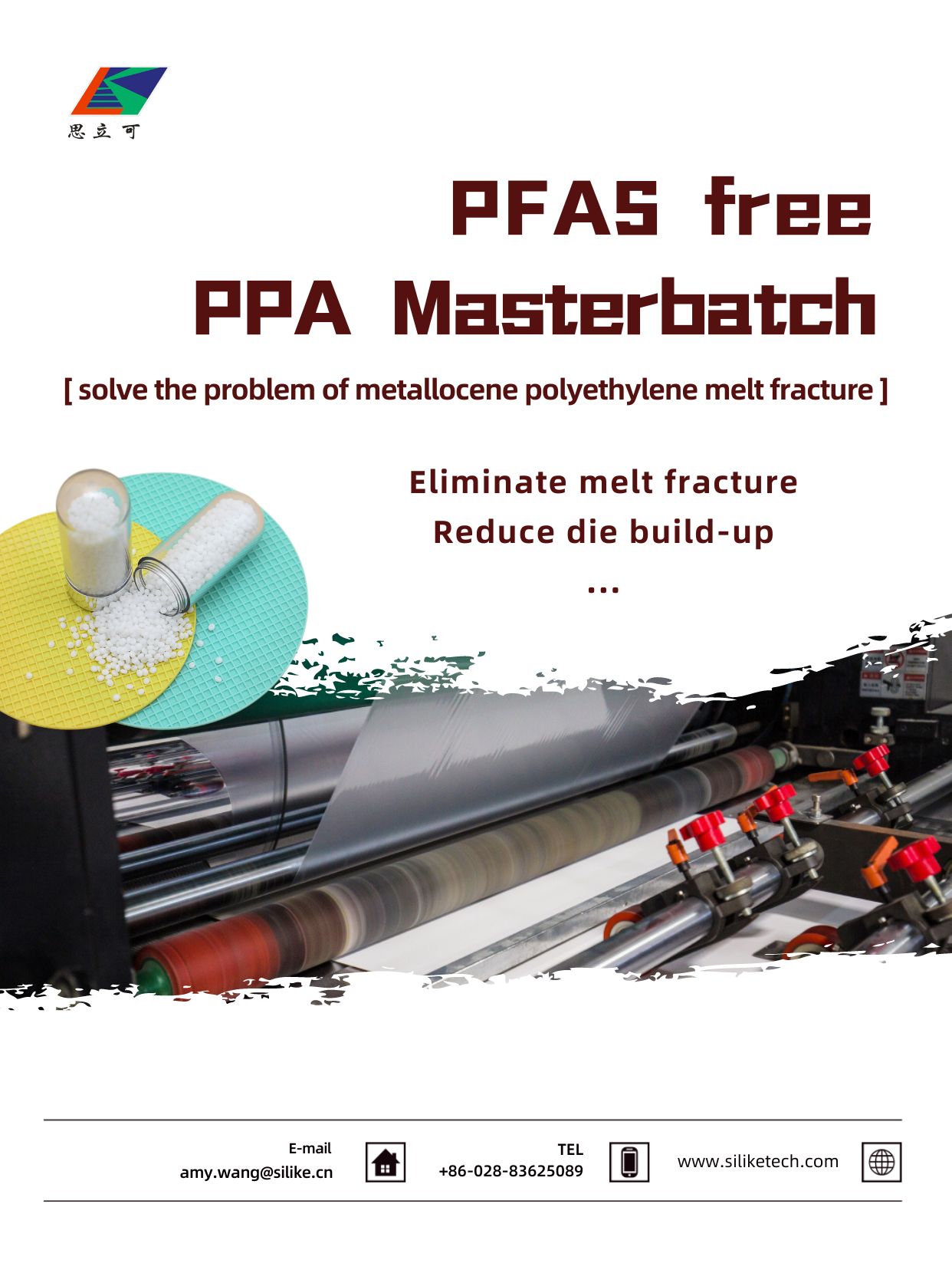
PFAS Free Solutions
SILIKE SILIMER fluorine-free solutions are engineered to replace conventional PFAS-based processing aids and can be incorporated into polyolefins and engineering thermoplastics.
Stable Processing Performance
Designed to enhance melt stability and reduce die build-up during long-term, high-speed extrusion, helping maintain consistent output and improved surface quality.
Regulation-Ready Solutions
SILIKE solutions support manufacturers in meeting global regulatory requirements while enabling a smooth transition toward fluorine-free and sustainable processing systems.
1. Introduction
Cast film extrusion is widely used in high-performance packaging film production, where excellent optical clarity, uniform thickness, and stable output are critical requirements. Compared with blown film processes, cast film systems typically operate under higher temperatures and higher shear stress conditions at the die interface. While these conditions contribute to improved throughput and film transparency, they also significantly increase melt stress and material–metal interaction at the die lips. As a result, long-term industrial operation often faces persistent processing challenges that directly impact efficiency, product quality, and production cost.
This article highlights the key challenges in cast film extrusion, explains why these issues occur, evaluates the limitations of conventional solutions, and explores PFAS-free processing alternatives—helping manufacturers and processors identify more efficient, sustainable, and scalable polymer processing solutions.


2. Common Challenges in Cast Film Extrusion
In continuous cast film production lines, manufacturers frequently encounter the following issues:
• Die lip contamination during extended production runs
Polymer degradation and melt deposition gradually accumulate at the die surface, leading to unstable extrusion behavior.
• Surface defects affecting film quality
Melt stress and instability can result in gels, crystal points, and surface irregularities that reduce optical performance.
• Frequent shutdowns for cleaning cycles
Die buildup requires periodic cleaning, leading to unplanned downtime and reduced overall line efficiency.
• Reduced process stability under high output conditions
At increased throughput, melt flow becomes less stable, increasing variability in film formation.
These challenges are especially prominent in LLDPE, mLLDPE, and multilayer cast film structures designed for high clarity packaging applications.
Maintaining stable die cleanliness and consistent melt flow is therefore a key requirement for efficient and cost-effective production.
3. Why These Problems Occur in Cast Film Systems
The root causes of instability in cast film extrusion are closely related to processing conditions:
High shear stress at die lips accelerates polymer degradation
Elevated processing temperatures increase melt reactivity
Continuous contact between polymer melt and metal surfaces promotes buildup formation
Long production cycles amplify residue accumulation and gel formation
Over time, these effects result in:
Melt fracture tendencies
Die lip contamination
Surface quality deterioration
Reduced operational continuity
Traditional process adjustments alone are often insufficient to fully eliminate these issues in high-speed production environments.

4. Limitations of Conventional Solutions
To manage these challenges, processors have historically used several approaches:
Fluoropolymer-based processing aids (PFAS-containing systems)
Effective in reducing die buildup
Increasingly restricted due to environmental and regulatory concerns
External lubricants or slip additives
Limited long-term stability
Potential migration issues in film applications
Process optimization (temperature, screw speed adjustments)
Only partially effective
May compromise throughput or film properties
As sustainability regulations tighten globally, the industry is actively shifting toward PFAS-free and fluorine-free processing solutions that maintain performance without regulatory burden.

5. PFAS-Free Solution: SILIKE SILIMER Series Polymer Processing Aids
The SILIKE SILIMER Series PFAS-free Polymer Processing Aids (PPAs) are designed to address the key processing challenges in cast film extrusion systems by improving melt behavior and die interface stability.
Through a carefully engineered polymer-active system, SILIMER PPAs support stable processing without relying on fluorinated chemistry.
Key Functional Benefits in Cast Film Extrusion
Enhances melt flow stability under high shear conditions
Reduces die lip contamination and polymer buildup
Helps minimize gel formation and crystal point defects
Supports more stable and continuous production cycles
Maintains optical properties such as clarity and gloss at recommended dosages
These performance characteristics make SILIMER PPAs suitable for demanding, high-speed film production environments.
6. Performance Advantages in Industrial Operation
When properly incorporated into cast film formulations, SILIMER Series PPAs can help manufacturers achieve:
• Cleaner die operation over extended production runs
Reduced accumulation at die lips improves operational continuity.
• Improved surface quality and optical consistency
Lower incidence of gels and surface defects enhances final film appearance.
• Reduced downtime and maintenance frequency
Less frequent cleaning cycles contribute to higher line productivity.
• More stable extrusion behavior at higher output rates
Improved melt flow consistency supports efficient scaling of production.
• Balanced performance without compromising film clarity
Designed to maintain key optical properties critical for packaging applications.
7. Application Scope
The SILIMER Series PFAS-free PPAs are suitable for a wide range of polyolefin-based extrusion systems, including:
♦ Cast film extrusion (PE, LLDPE, mLLDPE systems)
♦ Blown film extrusion
♦ Multilayer packaging film structures
♦ Industrial stretch and wrapping films
♦ High-clarity packaging applications
8. Industry Shift Toward PFAS-Free Processing
With increasing global regulatory pressure on PFAS-containing materials, film producers are accelerating the transition toward:
• Fluorine-free processing aids
• Sustainable extrusion additive systems
• Non-migratory processing solutions for packaging films
This transition is not only driven by compliance requirements but also by the need for stable, cost-efficient, and long-term production reliability.
SILIKE SILIMER Series supports this shift by offering a PFAS-free alternative designed for industrial-scale extrusion performance.
8. Conclusion
Cast film extrusion systems demand high levels of process stability to achieve consistent optical quality and efficient production output. However, high shear and elevated temperature conditions often lead to die buildup, surface defects, and operational inefficiencies.
SILIKE SILIMER Series PFAS-free Polymer Processing Aids provide a practical solution by improving melt flow stability, reducing die contamination, and supporting cleaner long-term operation without compromising film properties.
For manufacturers seeking to enhance productivity while transitioning toward PFAS-free processing technologies, SILIMER Series offers a reliable and scalable approach for modern cast film production systems.
Technical Support & Application Guidance Available Upon Request
Ready for a new
Era of PFAS-Free Extrusion Performance?
Enabling stable, efficient, and compliant polymer processing for global film manufacturers
Post time: Jul-02-2026


