
Solutions for PA GF30, Modified PP Compounds, and Home Appliance ABS
Engineers Are Searching for These Answers Every Day
“How to reduce glass fiber protrusion on PA6 GF30?”
“Why is torque so high in filled PP compounds?”
“How to improve scratch resistance of ABS housings?”
“Is there a non-blooming alternative to silicone oil?”
Even with premium resins and optimized machines, processors often face:
♦ Excessive torque and energy consumption
♦ Visible glass fiber exposure on reinforced parts
♦ Flow marks, uneven gloss, and surface defects
♦ Difficult demolding and unstable extrusion
♦ Low efficiency in high-filled systems
Result: higher scrap rates · longer cycle times · quality complaints
For many plants, the real bottleneck is formulation, not equipment.
Stop these issues in Engineering Plastics with Silicone Powder — Your Polymer Additive Solution
What Silicone Powder Actually Does in Engineering Plastics
Silicone powder is a high-performance powdered plastic additive composed of ultra-high molecular weight polydimethylsiloxane (PDMS) dispersed on silica. It reduces internal friction, improves mold release, and enhances surface quality across a wide range of thermoplastics and engineering plastics, including PA6 GF30, ABS, PP, PC, PBT, PPO, PPS, and more.
Chengdu SILIKE Technology Co., Ltd. offers the LYSI Series Silicone Powder, containing 55–70% ultra-high molecular weight PDMS uniformly dispersed on silica.
Silicone Powder as Polymer Additives And Modifiers — Enhancing Processing Efficiency and Surface Quality.
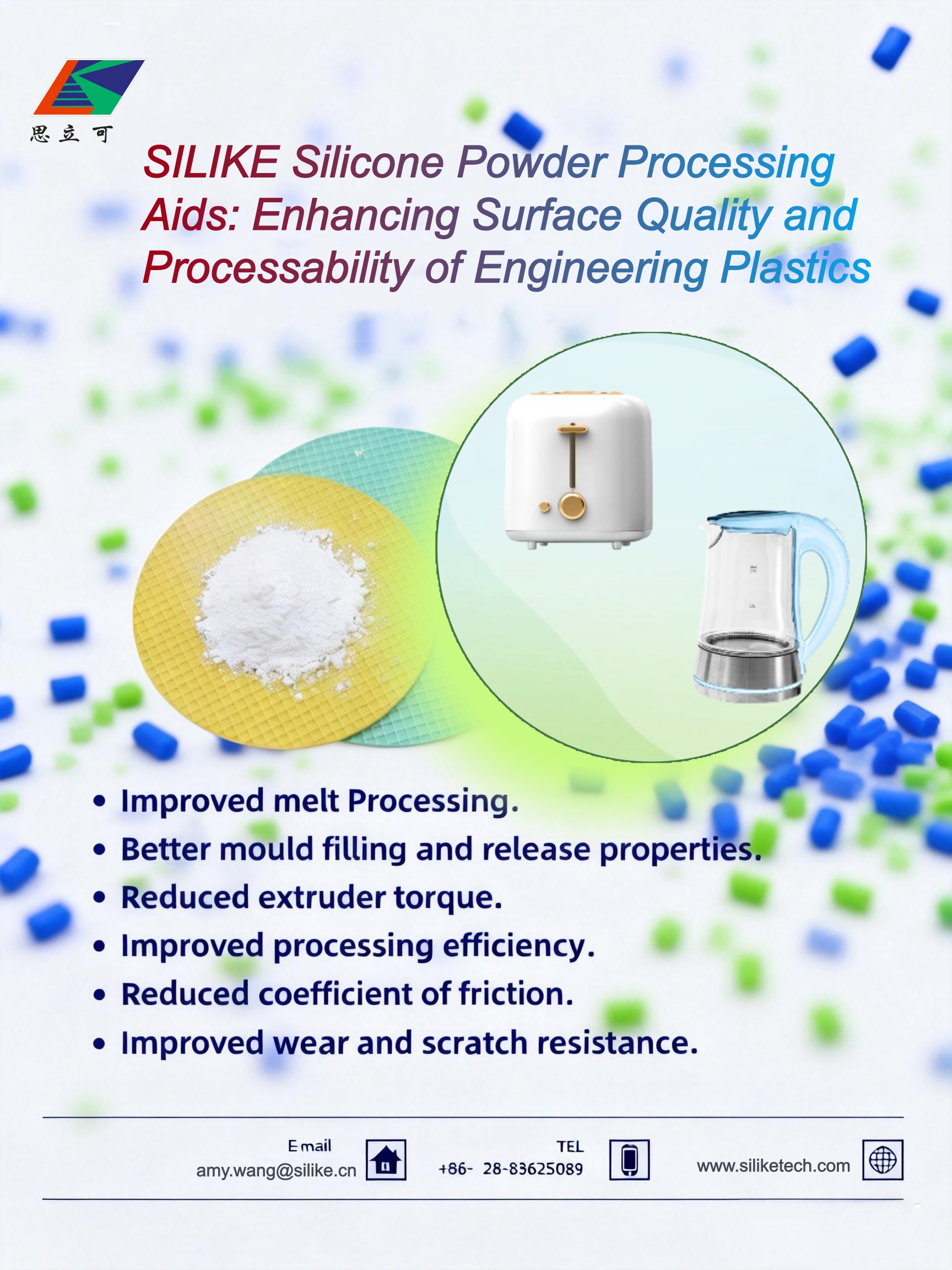
Key Functions of Silicone Powder: An efficient silicone-based additive and processing aid in plastics manufacturing
1. Reduces Friction and Torque
Lowers the melt viscosity and internal shear stress
Reduces energy consumption in injection molding and extrusion
Minimizes torque in high-filled or glass fiber reinforced compounds
2. Improves Mold Release and Demolding
Forms a lubricating layer between the melt and mold surfaces
Reduces sticking, surface defects, and demolding forces
Shortens cycle time and lowers scrap rates
3. Enhances Surface Quality
Reduces glass fiber protrusion and flow marks
Increases surface smoothness and gloss uniformity
Improves scratch and wear resistance, especially in ABS and high-strength PA components
4. Highly Compatible with Multiple Resins
Works in both filled and reinforced systems
Preserves mechanical properties and aesthetics
Recommended Usage of SILIKE silicone powder
• Dosage: 0.1%–2.0% of resin weight (adjust according to resin type and filler content)
• Method: Pre-compound with resin before molding
• Tip: Avoid direct dry dosing to prevent clumping and uneven dispersion
Proper use of silicone powder can increase production efficiency, improve part quality, and reduce defects without changing existing equipment.
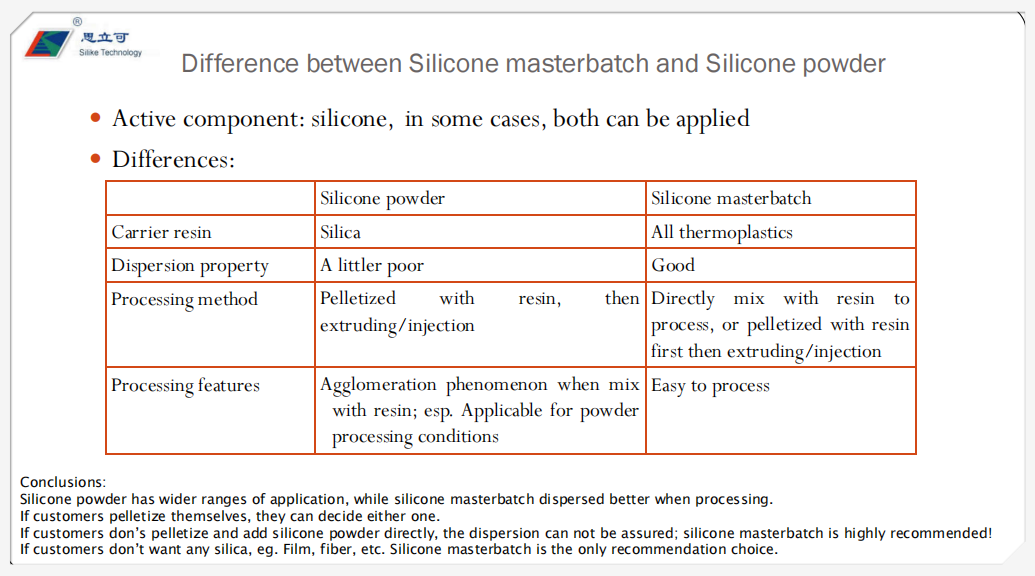
Silicone Powder vs. Silicone Masterbatch: Which Plastics Additives Should You Choose?
Although silicone powder and silicone masterbatch share the same main ingredient (PDMS), their applications and performance characteristics differ significantly.
Compared with conventional low-molecular-weight silicone or siloxane additives—such as silicone oil, silicone fluids, and other processing aids—SILIKE Silicone Powder offers enhanced processing performance and can effectively improve the surface quality of finished products.
As a highly efficient silicone-based additive and processing aid, silicone powder is widely used in thermoplastics and engineering plastics to boost production efficiency, enhance surface finish, and optimize overall product performance.
Get Professional Support and Free Samples of High-performance Silicone and Siloxane Additives
For technical guidance or to trial SILIKE LYSI Series Silicone Powder in your thermoplastics and engineering plastics application:
Contact our engineers for personalized recommendations
Request a free high-performance silicone powder sample
Receive guidance on recommended grade and dosage
Contact SILIKE:
Tel: +86-28-83625089
Email: amy.wang@silike.cn
Website: www.siliketech.com
With SILIKE silicone-based processing additives, your plastic products can be smoother, more durable, and highly efficient.
Post time: Feb-04-2026


