
Introduction: Why TPE Car Floor Mats Are Popular but Challenging?
Thermoplastic Elastomer (TPE) car floor mats have become a preferred choice for automakers and consumers thanks to their unique blend of flexibility, durability, and eco-friendliness. Compared with traditional rubber mats, TPE mats are lighter, odorless, recyclable, and capable of withstanding extreme hot or cold temperatures without cracking or deformation.
However, many drivers notice the same recurring problem: TPE mats wear out quickly in high-traffic zones, especially on the driver’s side where continuous friction from shoes, dirt, and pressure causes scuffing, thinning, or even tearing. This not only shortens the lifespan of the mats but also reduces their ability to protect the vehicle interior.
This article explores why TPE mats face durability challenges, what traditional methods have been used to solve them, and how silicone additives like SILIKE LYSI-306 provide an efficient solution that significantly enhances wear resistance without compromising flexibility.
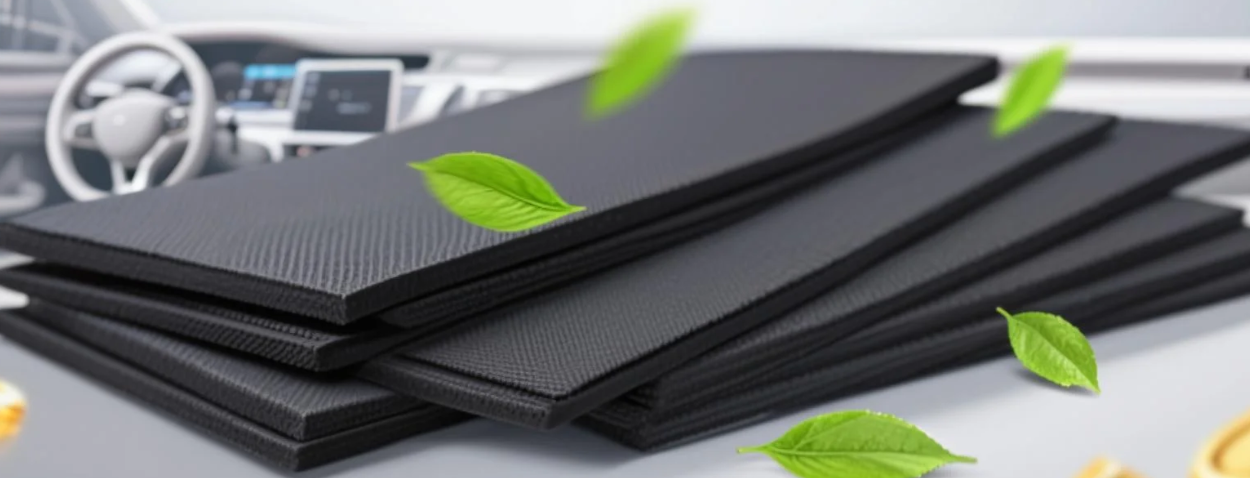
Why Do TPE Car Floor Mats Lose Durability Over Time?
While TPE is recognized for its toughness, it still struggles under repeated, concentrated stress. The main reasons include:
High friction coefficient: TPE surfaces are prone to abrasion under constant shoe contact.
Pressure concentration: The driver’s heel area experiences constant pressure while braking and accelerating, causing thinning.
Environmental particles, such as dirt, sand, and small stones, act as abrasives, accelerating surface wear.
Material limitations: Standard TPE formulations may lack the balance between softness, flexibility, and long-term abrasion resistance.
From a consumer perspective, this translates into visible scratches, reduced comfort, and faster replacement cycles—issues that lead to customer dissatisfaction and warranty concerns for manufacturers.
Traditional Solutions: Why They Fall Short
Over the years, manufacturers have attempted several methods to improve the durability of TPE floor mats:
Increasing thickness – While adding more material may delay wear, it increases weight and material costs, and does not fundamentally solve abrasion issues.
Multi-layer designs – Using harder outer layers with softer inner cores can enhance performance, but complicates production and raises costs.
Material substitution – Switching to more rigid plastics or rubber improves durability but sacrifices flexibility, comfort, and eco-friendly properties.
These solutions often lead to trade-offs between cost, comfort, and sustainability. What manufacturers need is a solution that strengthens TPE’s wear resistance without undermining its core advantages.
The Effective Solution: Silicone Additives for TPE Floor Mats
This is where advanced silicone masterbatches come into play. By incorporating silicone-based additives into TPE formulations, manufacturers can enhance surface properties, improve wear resistance, and simplify processing—all without changing the overall flexibility of the material.
One standout product in this category is SILIKE LYSI-306, a silicone masterbatch specifically designed for TPE and automotive interior applications.
SILIKE LYSI-306 silicone additive: An effective solution for Durability TPE Car Floor Mats
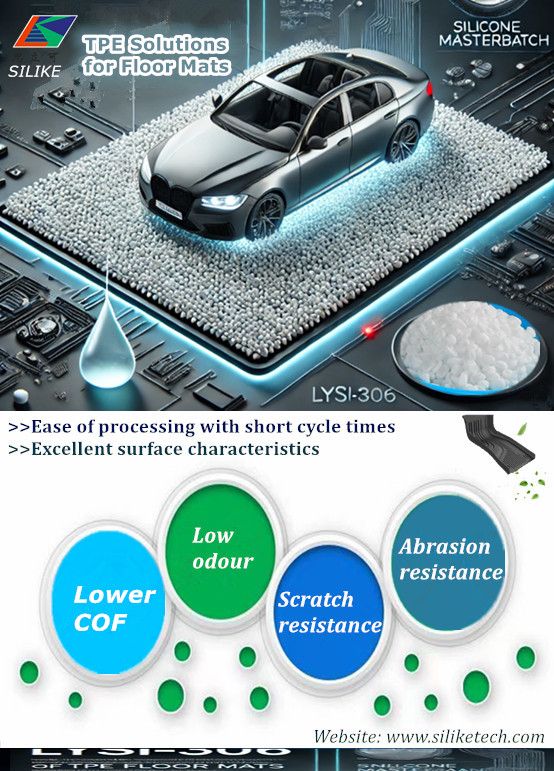
LYSI-306 has gained recognition in the automotive industry as an efficient anti-abrasion and scratch additive. When blended into TPE formulations for car floor mats, it provides multiple advantages:
Key Benefits of LYSI-306 for TPE Car Floor Mats
1. Superior wear and scratch resistance – Reduces visible scuffing and extends product lifespan.
2. Lower coefficient of friction – Minimizes sliding wear in high-traffic areas, such as the driver’s heel zone.
3. Improved processing efficiency – Enhances resin flow, ensures better mold filling, and makes demolding easier.
4. Reduced production costs – Shorter cycle times and lower energy consumption.
5. Preserved flexibility and eco-friendliness – Maintains the softness and recyclability that make TPE attractive to automakers.
6. Beyond Floor Mats: Wider Applications in Automotive Interiors
The advantages of Anti-scratch Silicone Masterbatch LYSI-306 silicone additive are not limited to floor mats. The same properties that improve wear resistance and scratch durability can be applied to other automotive interior parts, including:
Steering wheels
Door panels and trims
Console covers
Gear shift components
Cup holders and armrests
This makes silicone additive LYSI-306 an excellent choice for manufacturers seeking unified material solutions across multiple components, reducing development complexity while ensuring consistent quality.
Frequently Asked Questions (FAQ)
Q1: What causes TPE car floor mats to wear out quickly?
A: Continuous friction, concentrated pressure from shoes, and abrasive particles such as dirt and sand lead to surface thinning, scratches, and wear over time.
Q2: How do silicone additives like LYSI-306 improve wear resistance?
A: Silicone additives lower the friction coefficient of TPE, enhance abrasion resistance, and provide smoother surfaces, which delays visible wear and extends mat durability.
Q3: Is Anti-scratch Masterbatch LYSI-306 compatible with all TPE grades?
A: Yes. LYSI-306 is engineered to work with a wide range of TPE formulations, making it highly versatile for different automotive applications.
Q4: Will adding silicone Anti-scratch agent LYSI-306 increase production costs?
A: On the contrary, LYSI-306 reduces energy consumption, shortens cycle times, and simplifies demolding, leading to cost savings in large-scale production.
The automotive industry is moving toward materials that are sustainable, durable, and customer-friendly. While TPE has many advantages, its durability challenges have limited its long-term performance in floor mat applications.
By integrating SILIKE LYSI-306 silicone masterbatch, manufacturers can unlock the full potential of TPE—combining flexibility, sustainability, and superior wear resistance.
Are you looking for a proven way to extend the lifespan of your TPE car floor mats and reduce production costs?
Discover how SILIKE plastic additive LYSI-306 can help you design the next generation of automotive floor mats and interior parts.
For more information, visit: www.siliketech.com Email: amy.wang@silike.cn
Post time: Sep-01-2025


