
Struggling with Surface Friction, Wear & Processing Issues in Plastics?
In modern plastic manufacturing, especially for TPE, TPU, and engineering plastics, surface performance is no longer optional—it directly impacts:
• Product quality
• Production efficiency
• Customer satisfaction
Common Challenges:
• High surface friction causing processing instability
• Poor scratch & abrasion resistance reduces product lifespan
• Severe mold fouling leading to downtime and maintenance costs
Industry Insight: Over 60% of plastic processors identify surface lubricity and wear resistance as critical for quality and cost control.
If your production line is experiencing high scrap rates, slow cycle times, or inconsistent surface quality, your formulation likely lacks an effective surface modification solution.
Why Traditional Additives Fall Short
Conventional additives like waxes, stearates, and low-molecular lubricants often create trade-offs:
× Limited long-term effectiveness (migration, blooming)
× Poor thermal stability
× Incompatibility with high-performance polymers
× Negative impact on mechanical properties
They may solve one issue—but create another.
The Solution — Silicone-Based Additives from SILIKE
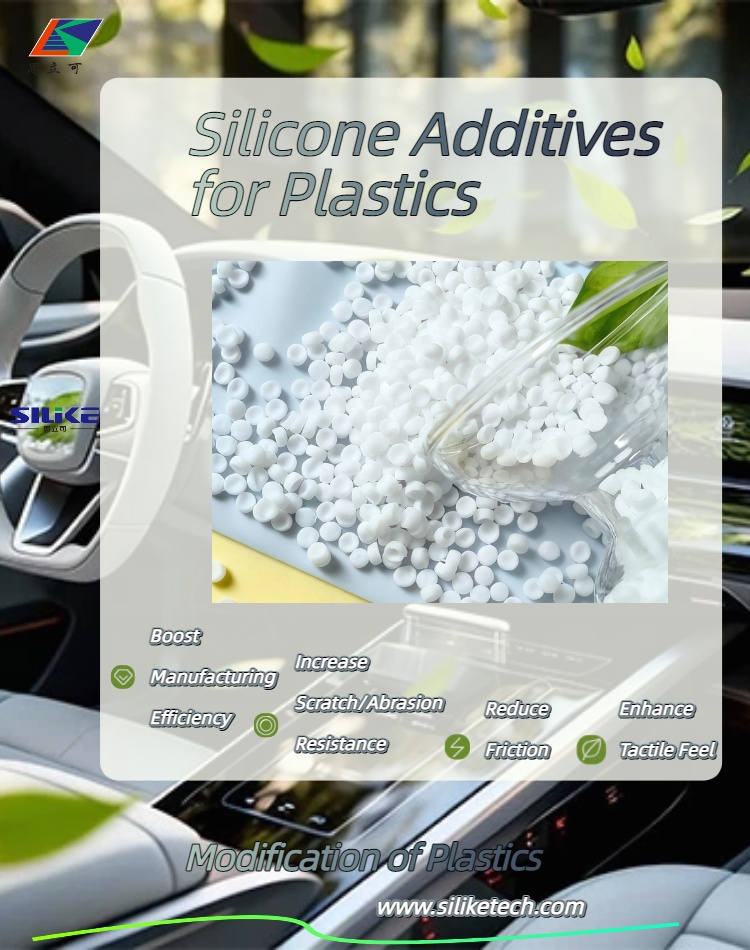
How SILIKE Silicone Additives Work
SILIKE silicone additives modify polymer surface behavior and manufacturing efficiency, delivering:
√ Enhanced Surface Lubricity
• Reducing friction and stick-slip issues
√ Improved Wear & Scratch Resistance
• Forms a durable protective interface, extending product lifespan
√ Optimized Processing Efficiency
• Faster mold release
• Reduced torque & die pressure
Why SILIKE? Proven Expertise in Silicone-Based Plastic Modification
Industry-Leading Expertise
Chengdu Silike Technology Co., Ltd. is a leading manufacturer of silicone-based materials, with over 20 years of experience in integrating silicone technologies into plastics and rubber. SILIKE silicone additives are designed for plastic modification, enhancing surface lubricity to deliver smoother finishes and more efficient processing.
Comprehensive Product Portfolio
SILIKE offers a wide range of high-performance additives, including:
• Silicone Masterbatch
• Silicone Powder
• Super-slip & anti-blocking solutions
• Anti-squeaking masterbatches
• Silicone wax
• Si-TPV (dynamic vulcanized thermoplastic silicone-based elastomer)
• PFAS-free polymer processing aids (PPA)
• Copolymeric siloxane additives and modifiers
• Hyperdispersants
• Functional additives for biodegradable materials
• Processing lubricants for wood–plastic composites (WPC)
• Matte effect masterbatches
…
Wide Compatibility Across Polymers
SILIKE silicone-based additives are compatible with a broad range of resins, including TPE, TPEE, TPU, PP, PE, PA, EVA, ABS, PC, PC/ABS, PBT, PET, PPS, and PEEK, without compromising mechanical or processing performance.
Real-World Applications of SILIKE Silicone Additives in TPE, TPU, and Other Plastics
Automotive Industry
Problem: Automotive interior components such as dashboards, door panels, and grips often suffer from scratches and friction issues that affect tactile properties and aesthetic quality.
Solution: SILIKE Anti-scratch silicone additives reduce friction, improve scratch resistance, and enhance the overall tactile feel of automotive parts.
Footwear Industry
Problem: TPE used in shoe soles often faces mold fouling and excessive friction, which slows production times and affects product quality.
Solution: By incorporating silicone polyolefin copolymers into TPE compounds, manufacturers can achieve faster cycle times, better mold release, and improved abrasion resistance.
Consumer Electronics
Problem: Soft-touch materials used in phone cases and consumer products often face surface degradation, fading, and high friction.
Solution: SILIKE Si-TPV and matte effect masterbatches provide a smooth, soft-touch finish, enhancing both aesthetic appeal and product durability.
…
Frequently Asked Questions (FAQ) About Silicone Additives for Plastics
1. What are silicone additives used for?
Silicone additives enhance both processing performance and surface quality of plastics. They are ideal for industries like automotive interiors, cable & wire compounds, footwear, plastic pipes, films, textiles, and coatings.
Key Benefits:
Processing: smoother melt flow, lower extruder torque, reduced die pressure & die drool, better mold filling, easier release, less energy consumption, shorter cycle times.
Surface: lower friction, improved scratch & wear resistance, enhanced slip, and better hand feel.
2. Why choose silicone additives over waxes or stearates?
Silicone additives deliver long-lasting and stable performance:
Less migration & blooming
Higher thermal stability
Excellent compatibility with engineering plastics
Consistent results over time
3. Can silicone-based additives improve scratch and abrasion resistance?
Absolutely! Silicone additives create a dynamic lubrication layer that reduces abrasion and improves scratch resistance.
4. How do silicone lubricant additives improve mold release?
Silicone additives act as internal and external lubricants, reducing adhesion between polymer and mold:
Faster demolding
Less mold fouling
Shorter cycle times
5. Are PFAS-free options available?
Yes! SILIKE provides PFAS-free polymer processing aids (PPA) that meet strict environmental standards while ensuring excellent processing performance.
Unlock Better Plastics Performance Today!
Whether you’re aiming for smoother processing, superior surface quality, improved scratch and wear resistance, reduced mold fouling, enhanced tactile feel, or long-lasting performance, silicone additives are your ideal solution.
Take Action Today:
• Free Samples: Try SILIKE silicone additives in your applications and see the results firsthand.
• Personalized Consultations: Our teams will help you choose the right additives for your specific manufacturing needs.
• Product Guides & Case Studies: Discover how SILIKE silicone additives can address your unique production challenges.
Tel: +86-28-83625089
Email: amy.wang@silike.cn
Website: www.siliketech.com
Post time: Mar-18-2026


